Solar IoT Low-Carbon Lighting – Tianjin Marine Science Park Binhai Landscape
The "Dual Carbon Goals"—carbon peaking and carbon neutrality—are China’s long-term national fundamental policies and specific down-to-earth initiatives. In the urban lighting sector, achieving low-carbon energy efficiency, as well as zero-carbon and carbon-reduction technologies, represents an inevitable trend in the future development of urban lighting. This is not only related to the healthy living of residents but also to the global natural environment and the country’s economic security system worldwide.
So how do we create a green light environment and achieve low-carbon emission reduction or even zero-carbon urban lighting?
As a comprehensive provider of smart urban lighting solutions, Sanxing Lighting has fully leveraged solar new energy and empowered the Dual Carbon Goals through technology in the Tianjin Urban Lighting Upgrade and Renovation Project—the Binhai Landscape Lighting Project of the Marine Science Park. Taking the lead in pioneering zero-carbon technologies for urban lighting, it has delivered another successful case for building a green and healthy urban light environment.
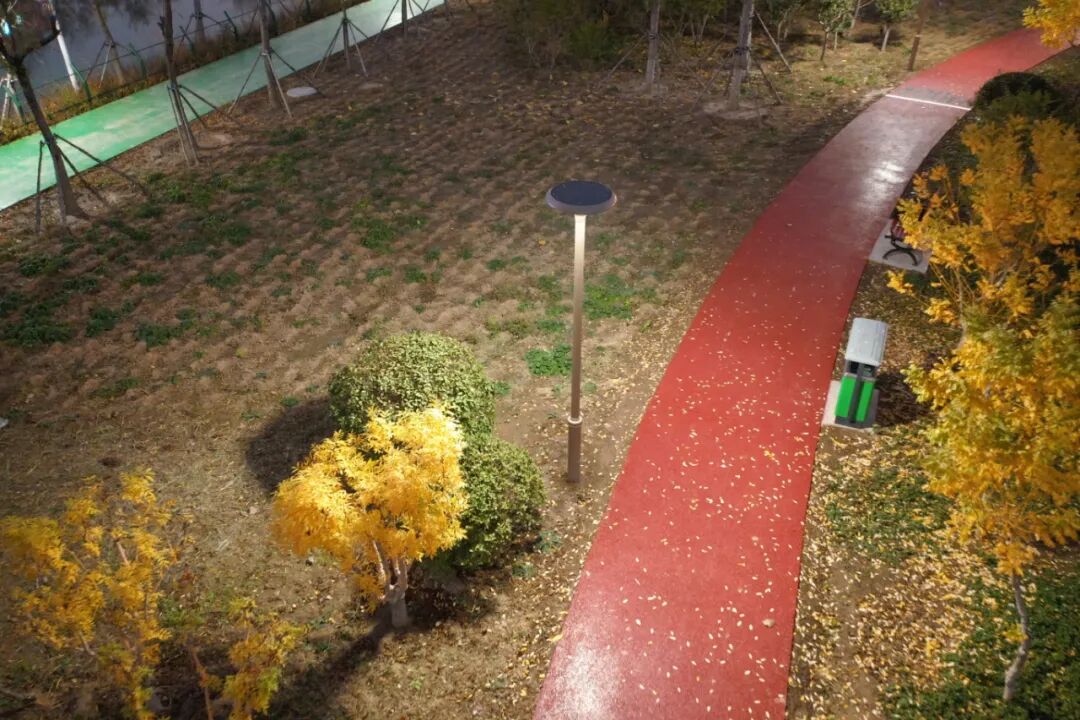
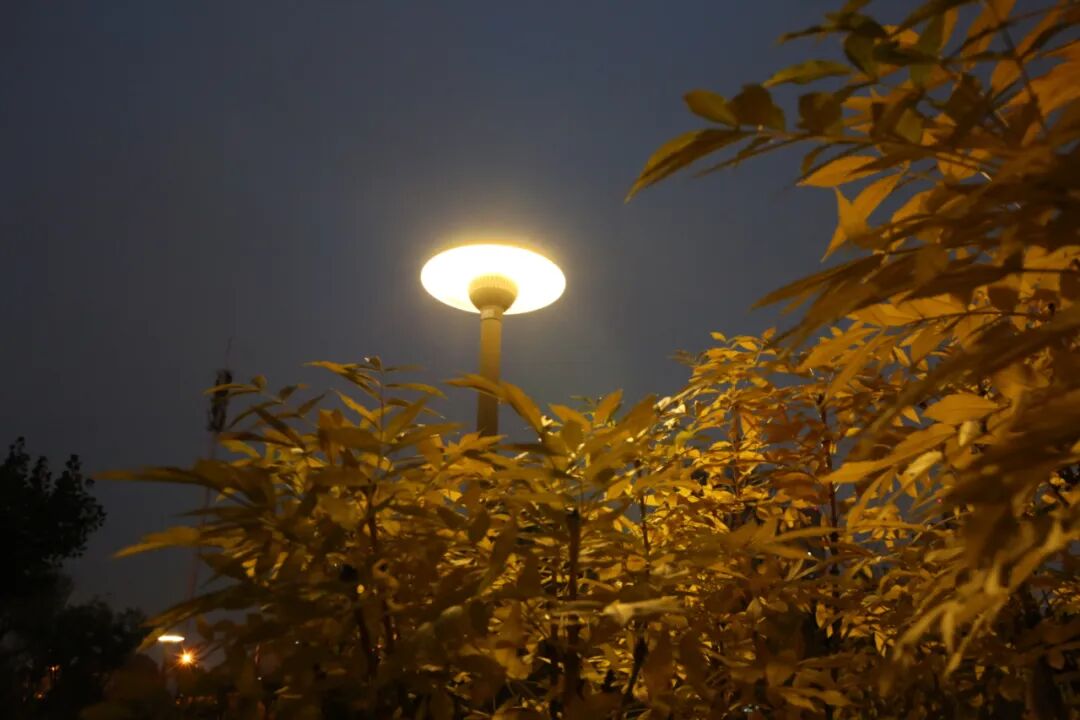
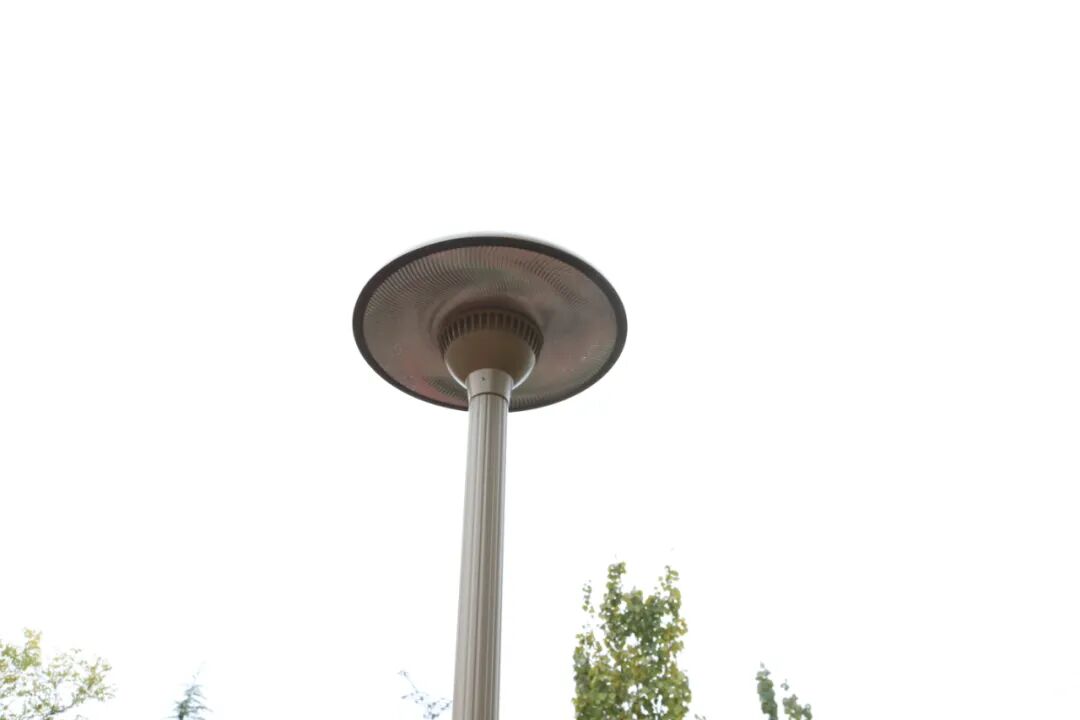
In the Tianjin Marine Science Park project, Sanxing Lighting worked closely with relevant parties to deeply understand customer needs and urban development concepts. Taking the solar-powered smart courtyard light "Dandelion" as the main lighting fixture for the project, it utilizes photovoltaic solar energy and eliminates the need for cable laying. This highlights the technical advantages of low-carbon emission reduction and green light environment, improves the travel experience for surrounding residents, and contributes to the city’s green development.
Let us take Sanxing Lighting’s solar-powered smart courtyard light "Dandelion" as an example to explain in detail its advantages in the field of solar new energy and urban smart lighting:
High light conversion efficiency
The solar-powered smart courtyard light "Dandelion" is equipped with monocrystalline silicon solar panels, which offer a higher light conversion rate (up to 18%) and a longer lifespan compared to polycrystalline silicon panels, making them more cost-effective.
In terms of production technology, monocrystalline silicon panels are first doped and diffused on silicon wafers—typically with trace amounts of boron, phosphorus, antimony, and other minor elements. The diffusion process is carried out in a high-temperature diffusion furnace made of quartz tubes, forming P/N junctions on the silicon wafers. Then, screen printing is used to apply a prepared silver paste onto the wafers to create grid lines. After sintering, the back electrode is formed simultaneously. An anti-reflection coating is applied to the grid side to prevent a large number of photons from being reflected off the smooth surface of the silicon wafers, maximizing the retention of light energy and achieving a higher light conversion efficiency. Monocrystalline silicon material is even used in the solar panels of space stations.
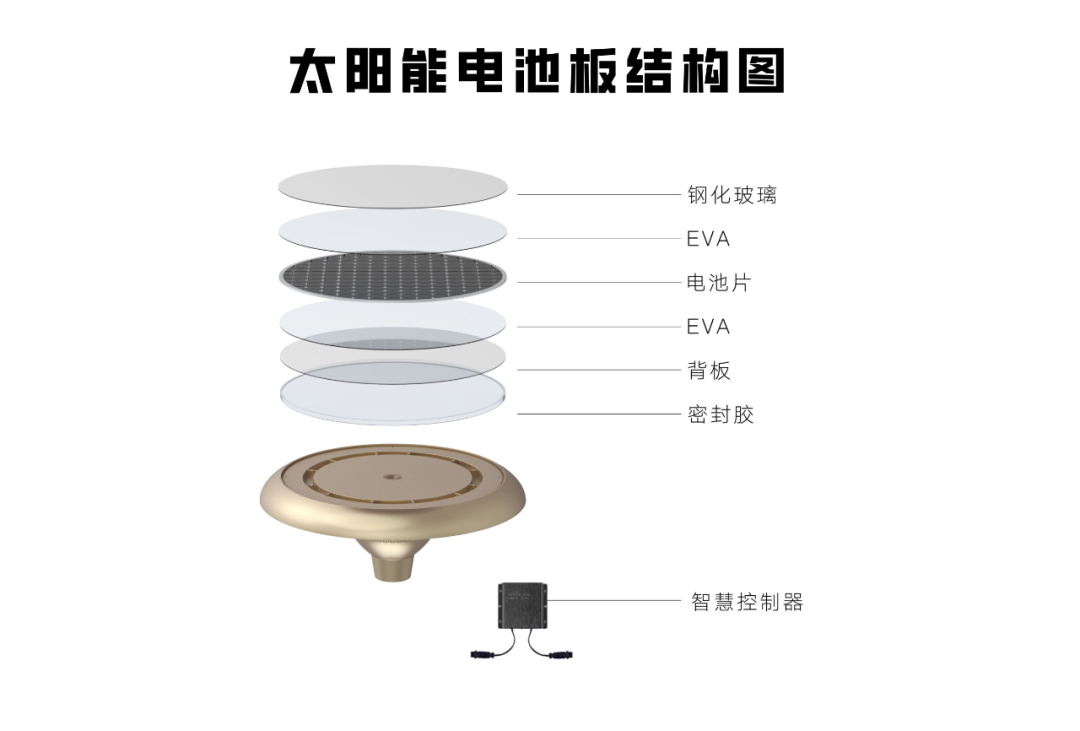
Secondly, the solar panels are encapsulated with tempered glass and EVA material, which prevents dust accumulation and ensures high light transmittance, providing a higher standard of guarantee for light conversion efficiency.
Stable charging and discharging efficiency
The performance of charging and discharging efficiency and its stability depend on the properties of the battery material. The solar-powered smart courtyard light "Dandelion" is equipped with lithium batteries, which deliver excellent performance in low-temperature discharge capacity, charging efficiency and energy density.
• Wide Temperature AdaptabilityChina has a vast territory with significant temperature differences across regions and seasons. Compared with lithium iron phosphate batteries, which prioritize high-temperature resistance, the lithium battery used in the solar-powered smart courtyard light "Dandelion" ensures stable output not only under high-temperature conditions but also performs reliably in winter at high latitudes or inland areas, with excellent low-temperature discharge performance ranging from -15℃ to +50℃.
• High Charging EfficiencyThe performance of charging efficiency largely depends on the ratio of constant current charging capacity to total battery capacity, also known as the constant current ratio. The "Dandelion" features a high constant current ratio, which translates to high charging efficiency.
• High Energy DensityBattery energy density directly determines the energy storage capacity of a battery. While ordinary lithium iron phosphate batteries only reach approximately 150Wh/kg, the lithium battery in the "Dandelion" achieves 265Wh/kg. Under the same sunlight conditions, the "Dandelion" has greater energy storage capacity. When paired with Sanxing Lighting’s smart controller, it can ensure normal operation for 3 to 7 days even in overcast or non-sunlight conditions.
Long Service LifeThe service life of solar lighting fixtures is mainly determined by the solar panels and batteries. The solar-powered smart courtyard light "Dandelion" possesses unique technical advantages for both its monocrystalline silicon panels and lithium batteries, ensuring a long service life.
• First, the monocrystalline silicon panels of the "Dandelion" exhibit an extremely slow degradation rate, meaning strong anti-aging performance, with a service life of up to 20 years. Additionally, excellent heat dissipation performance further supports the extension of its service life.
What does this mean for power retention over time? For example, after 20 years, the total light conversion efficiency between a monocrystalline silicon panel and a polycrystalline silicon panel will differ by approximately 12%.
• Long Service Life of the Lithium BatteryThe lithium battery in the "Dandelion" has a service life of 8 to 10 years. To understand why it is so durable, we first need to know what factors affect the service life of a lithium battery.
The service life of a lithium battery is related to its charge-discharge cycles. One charge-discharge cycle refers to a complete process where the battery is charged from 0% to 100% and then discharged back to 0%. Each time such a cycle is completed, the battery capacity decreases slightly. In other words, the life of a lithium battery is reduced by completing a charge-discharge cycle, rather than by the number of charging times, as many people assume. Charging before the battery is fully discharged does not count as a full cycle; it is only a charge-discharge loop. A full cycle is only completed when the cumulative discharged energy of the loops reaches the energy of one full charge-discharge cycle.
Given the "Dandelion" lithium battery’s excellent charge-discharge efficiency and high energy density, it is easy to understand why it has such a long service life.
Smart Lighting
The solar-powered smart courtyard light "Dandelion" is equipped with an advanced smart controller. It can automatically adjust the lighting time, brightness, and energy storage system according to different seasons, pedestrian flow, and sunlight conditions. For example, it may run at 30% brightness in the early evening, increase to 80%–100% when it is fully dark, or limit brightness to under 50% during continuous rainy weather. This meets lighting needs while saving energy and reducing emissions.
In addition, the solar smart controller also features intelligent functions such as adjustable charge-discharge power, overheat protection, external temperature sensing, and human body induction, providing reliable hardware support for smart urban lighting.
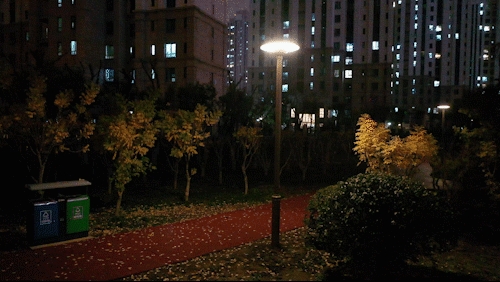
Technology Empowers Dual Carbon: Solar IoT for Urban Low-Carbon Lighting
Whether it is solar panels, batteries, controllers, light poles, or light sources, they form the hardware foundation for achieving urban low-carbon lighting. However, how to manage and operate these terminal devices to enable them to output and serve in an optimal combination falls within the functional scope of the software platform.
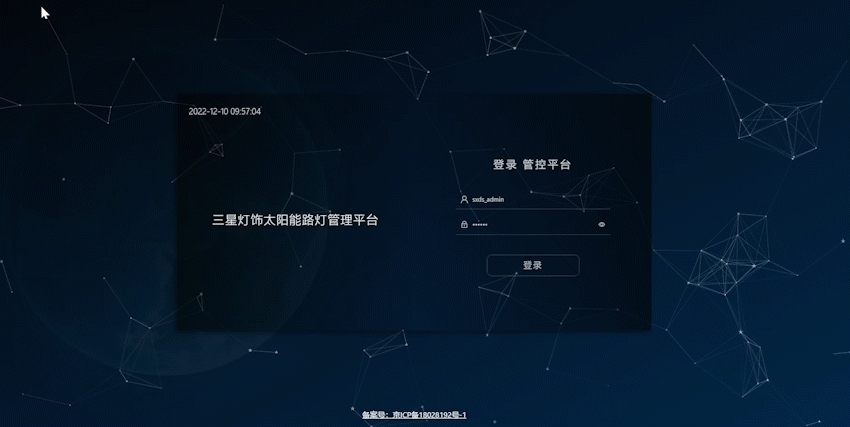
Sanxing Lighting Solar Street Light Management SaaS Platform
Built on new technologies such as the Internet of Things (IoT), big data, cloud computing, and artificial intelligence (AI), the Sanxing Lighting Solar Street Light Management SaaS platform enables remote smart installation, operation management, and maintenance of widely distributed solar street lights. It supports multi-user application isolation and multi-level business agency expansion, providing flexible and efficient data management including data collection, classification, structured storage, data retrieval, and usage analysis, as well as customized analytical business reports.
Featuring a modular business design for flexible orchestration, the platform meets the rapid development needs of industry applications. It enables functions such as management, control, parameter setting, status monitoring, data statistical analysis, system management, and policy issuance for single or grouped street lights.
• Intelligent and Precise Operation and Maintenance TechnologyOne-click precise navigation (offline + non-lit), fault distribution display on maps, and maintenance check-in to improve operation and maintenance quality and management efficiency while reducing costs.
• Multi-Dimensional Custom Report FunctionFull-process monitoring of construction and reporting processes. Various reports can be flexibly generated based on conditions such as region, reporter, and permissions, helping users conduct multi-angle and dynamic analysis to identify and resolve issues in a timely manner.
• Big Data Visualized Analysis and Reporting FunctionGenerates service products including fault analysis reports, NB signal distribution, and equipment working status analysis across multiple dimensions. It enables in-depth data insights and multi-dimensional, refined statistical analysis.
• Batch Device Operation FunctionSupports self-created device groups, area selection via GIS, and group addition (by town/street/community) for batch device operations and remote upgrades, delivering an excellent user experience.
• Policy Management FunctionAllows policy issuance to individual devices or groups of devices through group-based, individual, or scheduled policy issuance, improving efficiency and facilitating management.
In addition, the Sanxing Lighting Solar Street Light Management SaaS platform is accompanied by a mobile APP service, enabling users to manage the platform anytime and anywhere—right at their fingertips.